
Energy Efficiency in a Luxury Custom Home Hurst Home Company
Energy Efficiency in a Luxury Custom Home
Luxury is easy to see in a finished home. You notice the architecture, cabinetry, stone, lighting, flooring, and the way one room opens into another. Some of the most important features of a luxury custom home, however, are the ones you may never see. The insulation behind the walls. The way windows were selected and installed. How carefully the building envelope was sealed. The sizing and placement of the HVAC system. The orientation of the home on the property. Even decisions made around rooflines, glass, mechanical equipment, and moisture management can affect how comfortable and efficient a home feels for decades.
For Hurst Home Company, energy efficiency is not simply a collection of upgrades. It is part of building a home thoughtfully from the beginning.
A Luxury Home Should Be Comfortable Everywhere
Square footage alone does not make a home luxurious. Neither does a long list of expensive finishes. A truly well-built luxury home should feel comfortable. That becomes more challenging as homes grow larger and architectural designs become more complex. Tall ceilings, expansive windows, open living areas, bonus spaces, multiple levels, and large exterior doors can create beautiful spaces, but they also affect heating, cooling, airflow, and energy use.
North Carolina adds another consideration: heat and humidity.
During a Raleigh summer, a home’s mechanical systems do more than lower the thermostat. They are also managing humidity. An oversized HVAC system may cool a space quickly but cycle off before removing enough moisture from the air; proper equipment selection and sizing matter. This is why energy efficiency in a custom home starts with the house as a complete system rather than with a particular piece of equipment.

The Building Envelope Comes First
Before discussing sophisticated HVAC equipment or smart-home controls, it makes sense to get the fundamentals right. The building envelope separates conditioned living space from the outdoors. That includes exterior walls, roofing assemblies, insulation, windows, doors, penetrations, and their connections. Small construction details can make a substantial difference. Air leakage around a window opening, an inadequately sealed penetration, a break in the insulation system, or poorly detailed transitions between assemblies can compromise performance. Individually, these areas may seem minor. Across an entire house, they add up.
A high-performance custom home depends on continuity: insulation, air sealing, flashing, moisture control, and installation details need to work together. That requires attention on the jobsite long before drywall covers the work.
Windows Are an Architectural Decision and a Performance Decision
Few elements demonstrate the balance between luxury design and energy performance better than windows. Large expanses of glass can define a custom home. They bring daylight deep into the interior, frame views of the property, and strengthen the connection between indoor and outdoor spaces. But more glass changes the building’s thermal characteristics. Window specifications, glazing, orientation, shading, installation, and the amount of glass used on different elevations all deserve consideration. A wall of windows facing one direction may perform very differently from the same design facing another. The goal is not to eliminate glass in the name of efficiency.
The goal is to understand what the architecture is asking of the house and to select materials and systems accordingly.

HVAC Should Be Designed for the Home
A larger home does not simply need a larger HVAC system. It needs the right system. Room sizes, ceiling heights, window areas, insulation, orientation, occupancy, solar exposure, and the way spaces are used all influence heating and cooling requirements. Mechanical design should respond to those conditions. Zoning can also become important in a luxury custom home. A primary suite may have very different comfort requirements from a two-story great room, guest suite, home office, or bonus room over a garage. Thoughtful mechanical planning allows different areas of the home to function properly without forcing the entire house to operate as a single, undifferentiated space.
And there is another characteristic homeowners appreciate even if they rarely describe it as energy efficiency: quiet. Well-designed mechanical systems can reduce the constant cycling, rushing air, temperature swings, and equipment noise that make a house feel less refined. Luxury is sometimes the absence of things you notice.
Insulation Is Only as Good as Its Installation
Homeowners rarely see insulation once their home is complete, but its installation deserves the same attention as materials that remain visible. Insulation performance depends on more than the R-value printed on a product. Coverage matters. Voids matter. Compression matters. Connections between insulated assemblies matter. Air sealing around penetrations matters.
The objective is a consistent thermal boundary around the conditioned portions of the home.
This is one of the reasons experienced trade partners are so important. A good specification can still perform poorly if installation is careless. Conversely, careful execution of the building envelope can improve comfort every day the family lives in the home.
Efficiency Begins During Design
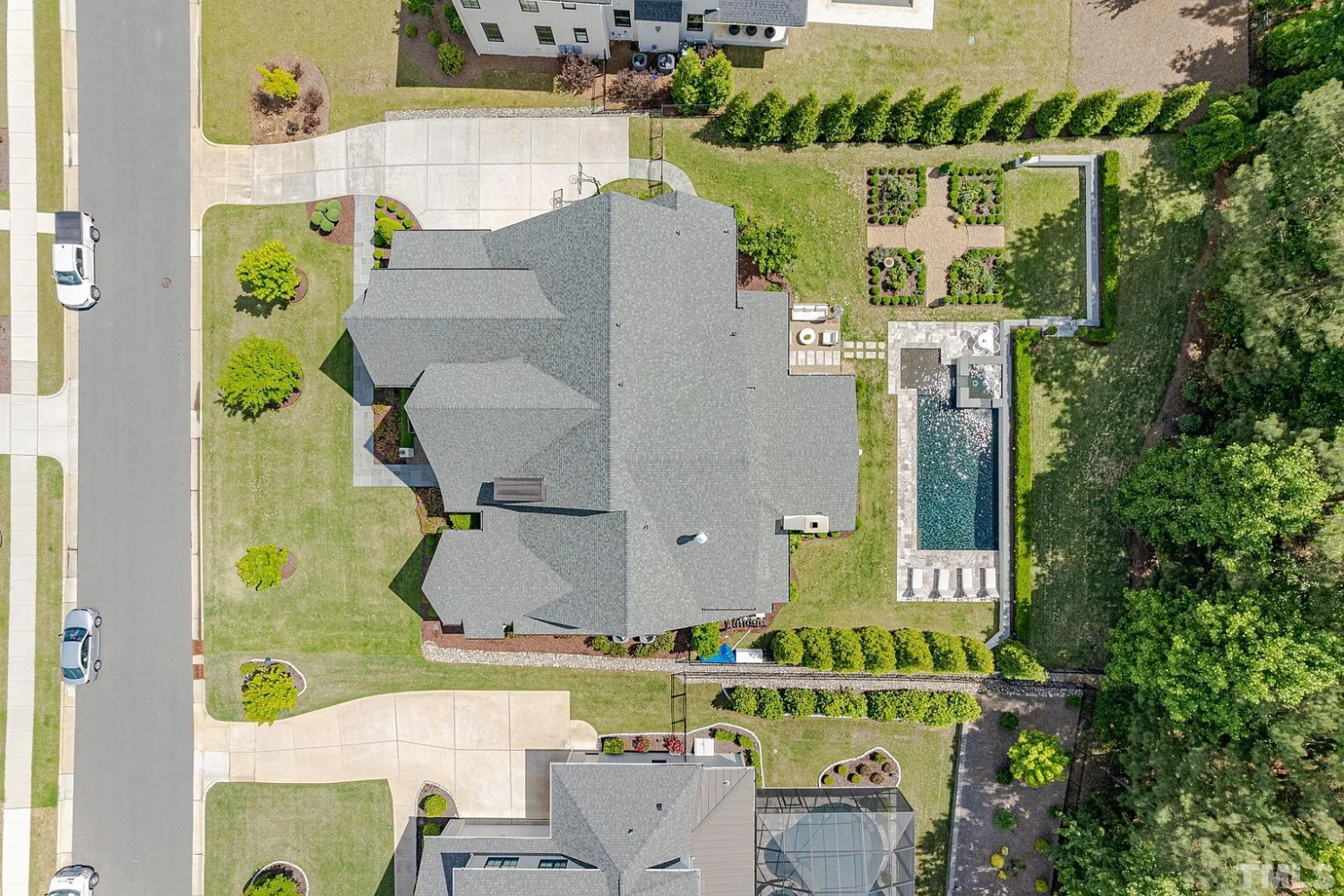
Some of the most effective energy decisions cost relatively little when made early. Home orientation is one example. The relationship between the house and the sun can influence daylight, heat gain, outdoor living areas, window placement, and mechanical loads. Roof overhangs and porches can provide shade while becoming important architectural elements. Window placement can capture views and natural light without treating every elevation identically. These decisions are difficult to reproduce later with equipment. That is one of the advantages of building a truly custom home. The architecture can respond to the property rather than forcing a predetermined house onto it.
Smart Technology Cannot Correct Poor Construction
Today’s luxury homes can include sophisticated thermostats, automated shades, energy monitoring, lighting controls, variable-speed equipment, and other connected technologies. Those systems can be valuable. But Technology should enhance a well-designed home, not compensate for a poorly performing one.
A smart thermostat cannot seal an air leak. Automated shades cannot correct an improperly specified window package. High-efficiency mechanical equipment cannot fully compensate for deficiencies in the building envelope.
We believe the order matters. Build the house well first. Then use Technology to make a good house perform even better.
Energy Efficiency Is Also About Durability
Efficiency is often discussed in terms of utility bills, but the conversation should be broader in a custom home. Heat, air, and moisture move through a building. Managing those forces correctly affects more than energy consumption. It can influence comfort, indoor conditions, material durability, and the structure’s long-term performance. That is particularly important in North Carolina’s climate, where moisture management deserves careful attention. The best construction decisions frequently solve several problems at once. A well-detailed assembly may improve thermal performance while also helping control air and moisture movement.
That is thoughtful construction.
Building for the Way You Will Actually Live
Every homeowner uses a house differently. Some families entertain frequently. Others work from home. Some want large doors that open living areas to a terrace or pool. A homeowner may want a temperature-controlled wine room, conditioned storage, a home gym, workshop, extensive kitchen equipment, or Technology integrated throughout the house. Those choices change the home’s performance requirements. This is why Hurst Home Company approaches efficiency as part of the larger custom-building conversation.
The objective is not to chase an arbitrary efficiency number at the expense of architecture or lifestyle. It is to understand how the homeowners intend to live and make informed decisions about the structure, materials, mechanical systems, and details that support that life.
Building a Better Luxury Custom Home
There is no single product that makes a home energy efficient. Performance comes from hundreds of decisions made throughout design and construction: some significant, some remarkably small. When those decisions are coordinated, the result is something homeowners experience every day. Rooms stay more comfortable. Systems operate more effectively. Humidity is better controlled. Exterior conditions have less influence on the interior. The house feels quieter, more consistent, and more substantial.
And most of that work disappears behind the finished surfaces. That may be one of the clearest distinctions between a house designed primarily to look luxurious and one that was genuinely built that way.
At Hurst Home Company, we believe luxury should extend beyond what you see. It should be present in how the home was planned, how it was constructed, and how well it performs for the people who live there.
